
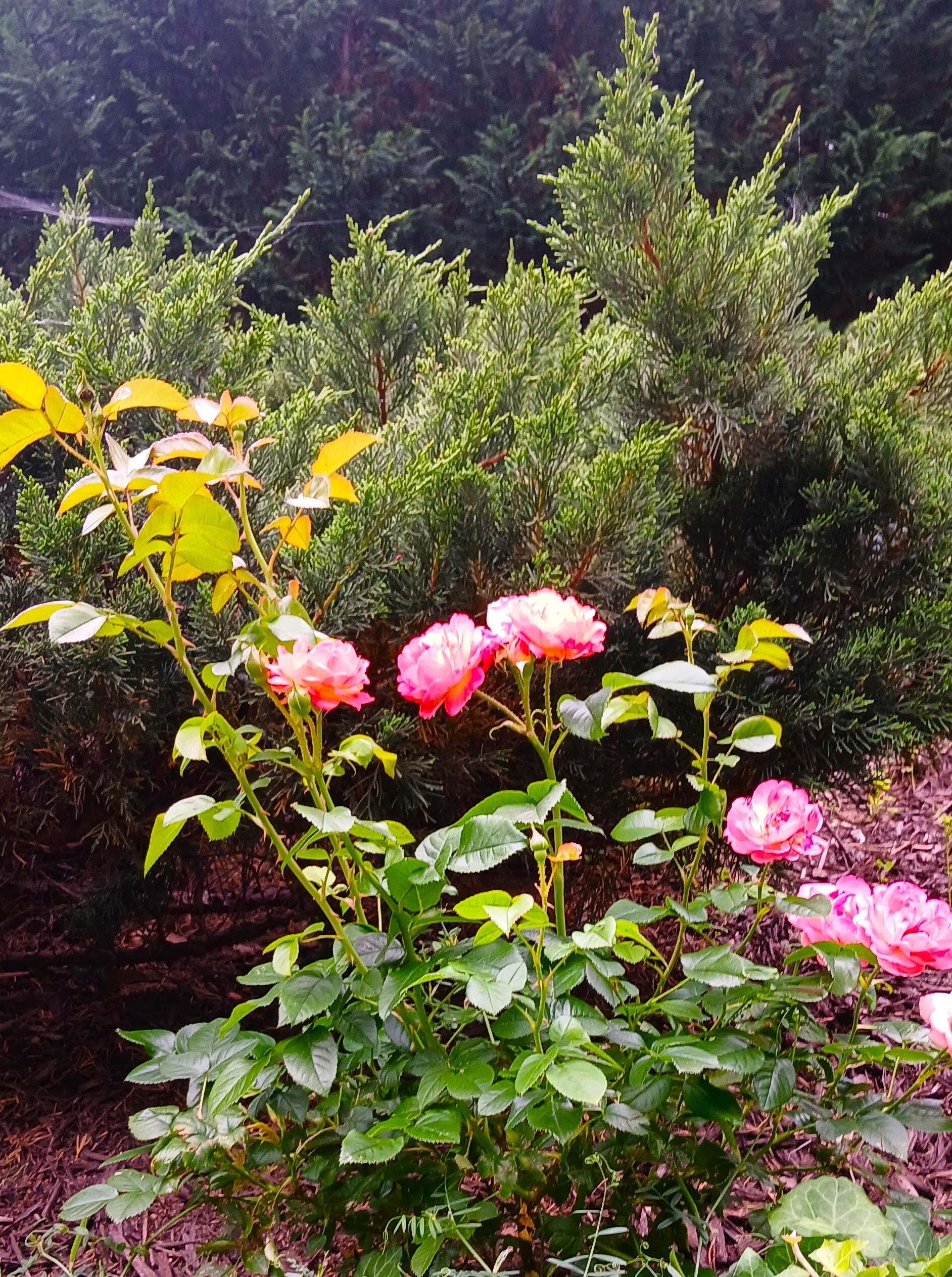
I first heard about the terrifying Rose Rosette Disease (RRD) in a neighbor’s email.
The woman seemed to be in a panic. She had recently bought a rosebush and was now detecting a lot of red leaves and multiple thorns, which she immediately associated with the rose virus, demanding that all of us get rid of our roses.
I went outside, looked at my plants, most of them now with vigorous new growths — all of the leaves were red, of course — and decided I wouldn’t do anything about it.
Life in the garden followed its course and several years went by.
Last year, when I started to invest more strongly in flowers, I bought some Knock Out roses and soon discovered that they were growing faster, healthier and more prolific than the others, so I kept buying them.
One of my focus points was the view from my kitchen window, so I bought two beautiful 2-gallon orange Knock Outs from Home Depot — orange is my favorite color — and they obliged.
How they obliged! Before the end of the season they had both doubled in size and blossomed copiously.
Winter came, and it was a particularly harsh winter during the 2025/2026 season, if you can recall. In Greenville it usually snows once a year, mostly in February, and some years there’s no snow at all. But this year, we had three or four heavy snow storms and the garden was covered by a foot of snow for more than 30 days in a row.
When spring arrived, I noticed that almost all the roses were covered in flexible, tiny thorns in a much higher number than usual. I was worried, but decided to wait a little longer, and soon the thorns were less visible, looking more normal. The plants were growing, so I forgot about it.
Then one day, a couple of months ago, I was watering the plants (this was before my radical makeover with drip irrigation), when I noticed that one of my beautiful orange rosebushes presented an abnormal growth, et voilà, I had finally been attacked by the dreadful RRD.
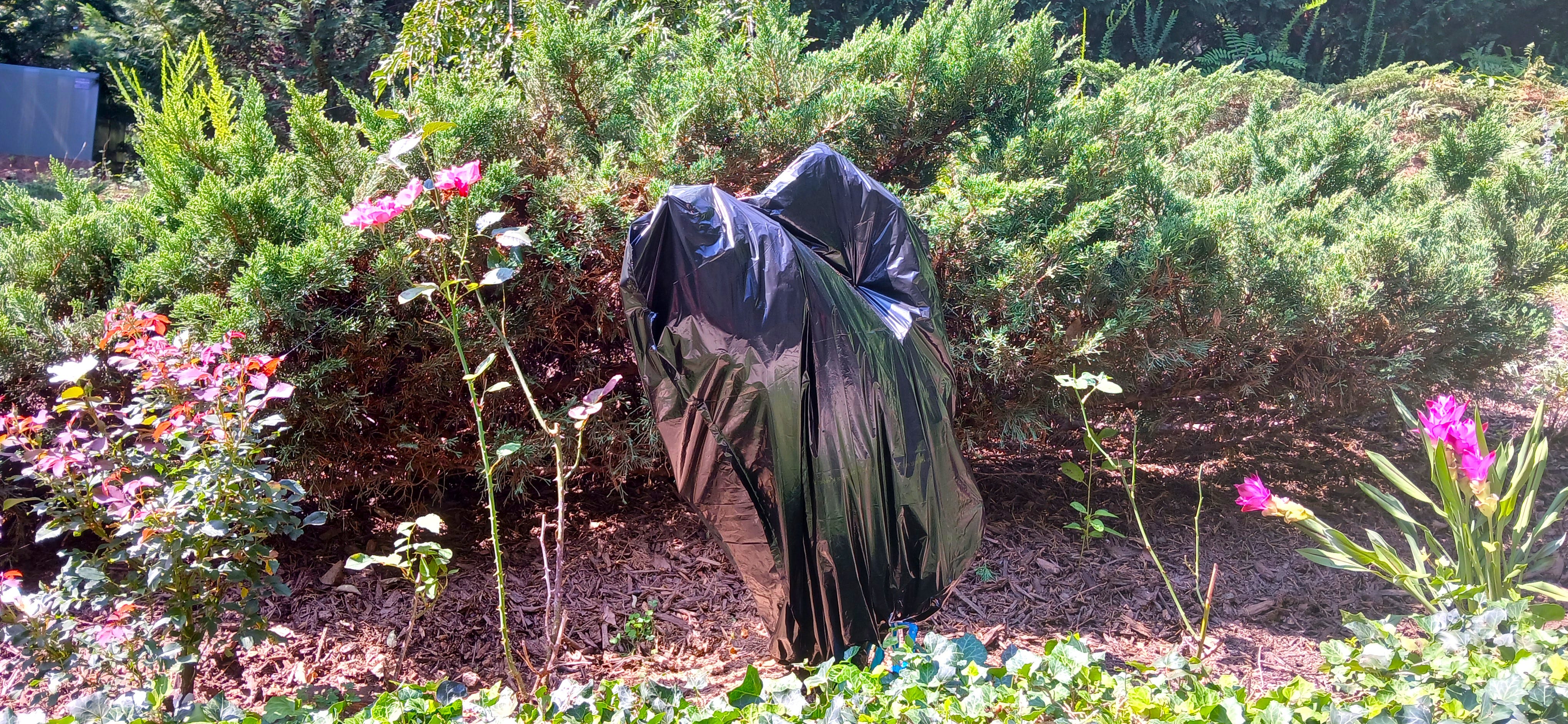
I looked it up online and found out that the virus had a one-year incubation period, which was exactly the timing in our case, so I didn’t hesitate for a minute. Despite being disappointed and sad to say goodbye to my roses, I immediately covered the whole plant with a black trash bag and the next morning took it out of the ground, covering the roots with another trash bag and making sure that no parts of the root were left behind.
There is no cure for Rose Rosette Disease and, according to AI, “RRD is a fatal viral disease caused by the Rose Rosette Virus (RRV) and is spread by microscopic, wind-borne eriophyid mites. Once a rose bush is infected, the virus spreads through the entire root system and is highly contagious, requiring the complete destruction of the plant to protect nearby roses.”
If this story gives you the creeps, know it’s well justified. It made me feel sick too.
After I unearthed the rose and returned it to Home Depot, I examined all the remaining 35 roses in the garden looking for symptoms, but found nothing. So I cleared the hole and planted a colorful ginger plant in it — as, and this is important, you cannot plant a rose in the same spot for at least a year.
And life went on.
Little did I know that my troubles had not yet ended. A month later, the “sister” orange Knock Out presented the exact same symptoms and had to be eliminated…
My husband asked what I used to detect the disease, and I answered: “My eyes!”
So although it is not the end of the world, or of the garden (although it might feel like it for a while), it is certainly the end of the plant in question, so keep your eyes well open and inspect regularly!
Author’s note: In general, plants from Home Depot are high quality and grow vigorously. However, this was a rare case in which the plants must have been infected in the nursery, as both roses presented the same symptoms at practically the same time and I don’t currently know of any nearby neighbors who cultivate roses. Home Depot didn’t even ask any questions and refunded the money immediately, almost a year after the purchase.