
Part of the fun of living in a forest is not only the flora, but also the fauna. Except, of course, the hungry bears that force us to adopt progressively aggressive measures to prevent them tipping over the trash can.
For instance, we have a “house” groundhog that likes to have lunch in our wildflower meadow in early spring. I don’t care, as we have so much green that one or two groundhogs won’t make a difference. This year, it brought the “missus” along and, in sunny afternoons, both enjoyed a siesta together on top of the retaining wall.
But we also have all kinds of critters that enjoy bulbs, flowers, roots, with varying levels of hunger each year: voles, squirrels, chipmunks. We don’t have rabbits. We have the occasional turtle, and deer are, unfortunately, rare.
Let’s leave the several species of hungry ants for another day.
My first encounter with a predator happened with a beautiful line of sunflowers. I planted the seeds and waited for them to sprout, which they did. Then I waited for them to grow and bloom, which they did. However, one beautiful day, I woke up, looked outside, and all the sunflowers had been eaten! All of them!
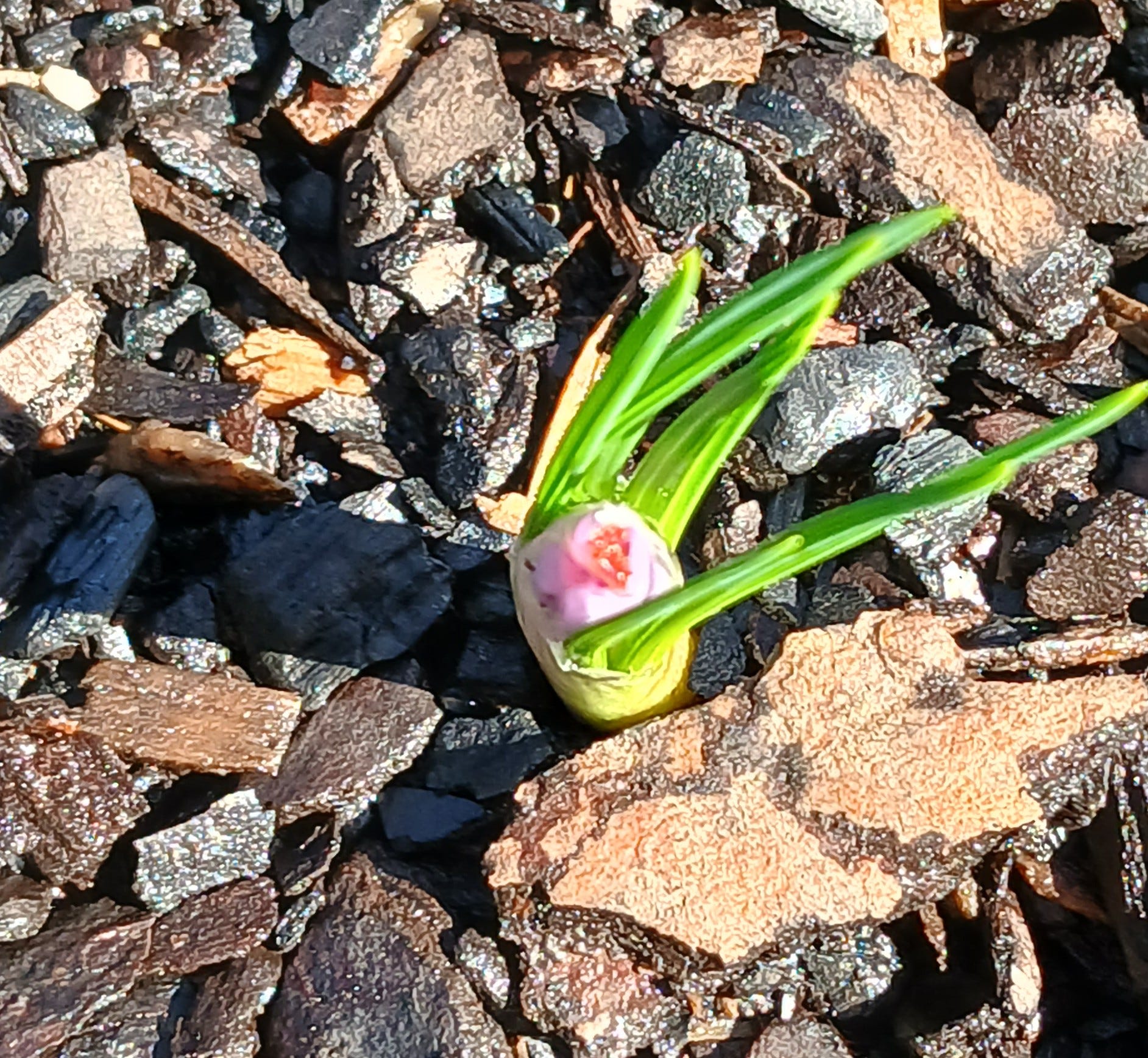
My first reaction was to double down on roses — the more thorns, the better. I tried some tulips, but was not very excited because they’re so short-lived. And last September I started to experiment with crocus, daffodils, gladiolus and hyacinths; looking forward to seeing the hyacinths naturalize, as in their first year they were pretty sparse.
So a couple of years ago I decided to experiment with lilies, one of my favorite flowers. I bought a couple of plants — plants, not just bulbs — and put them in the dirt, hoping to see them grow.
And they did. Initially. However, to my surprise, one day I was admiring a flower and noticed that it was going back into the ground.
What? How was that possible? I still tried to save some of the plants by putting them in water to grow roots, but I lacked the necessary patience and persistence for that particular method.
My friends, I tried everything, but the critters were clearly winning. I started with some disgusting, foul-smelling powder from Amazon, supposedly “dry blood” from some other animal. I tried a sonar. I even bought a metal screen from Breck’s, but never used it. Stuff like traps and heavy chemicals could very well attract and eliminate some rodents, but they didn’t attract me.
The last round of this inglorious fight, this time around newly planted mums that were entirely eaten, included a suggestion from AI to use cayenne pepper, with the downside that it had to be applied every three or four days.
It was around that time that I discovered that most rodents don’t appreciate some species of bulbs because they taste bad, and this changed everything. From that moment on, I adopted a completely different philosophy for my garden and didn’t regret it for a minute.
I stopped fighting, and started adapting.
Today, I never hesitate when discarding or changing a species that doesn’t perfectly integrate into my environment. I only choose drought-resistant perennials and bitter bulbs that critters detest.
So far, it’s a winning strategy. And I’m still learning every day.